1. LPUNEST 2026 Exam Highlights
| Parameter | LPUNEST 2026 Details |
|---|---|
| Exam Full Name | Lovely Professional University National Entrance & Scholarship Test |
| Conducting Body | Lovely Professional University (LPU), Phagwara, Punjab |
| Exam Level | University Level Entrance & Scholarship Assessment |
| Mode of Exam | Online Remotely Proctored (Home) OR Test Center Based |
| Maximum Scholarship | Up to 50% Tuition Fee Waiver (Band 1 Cutoff) |
| Official Helpline | 1800-200-2026 |
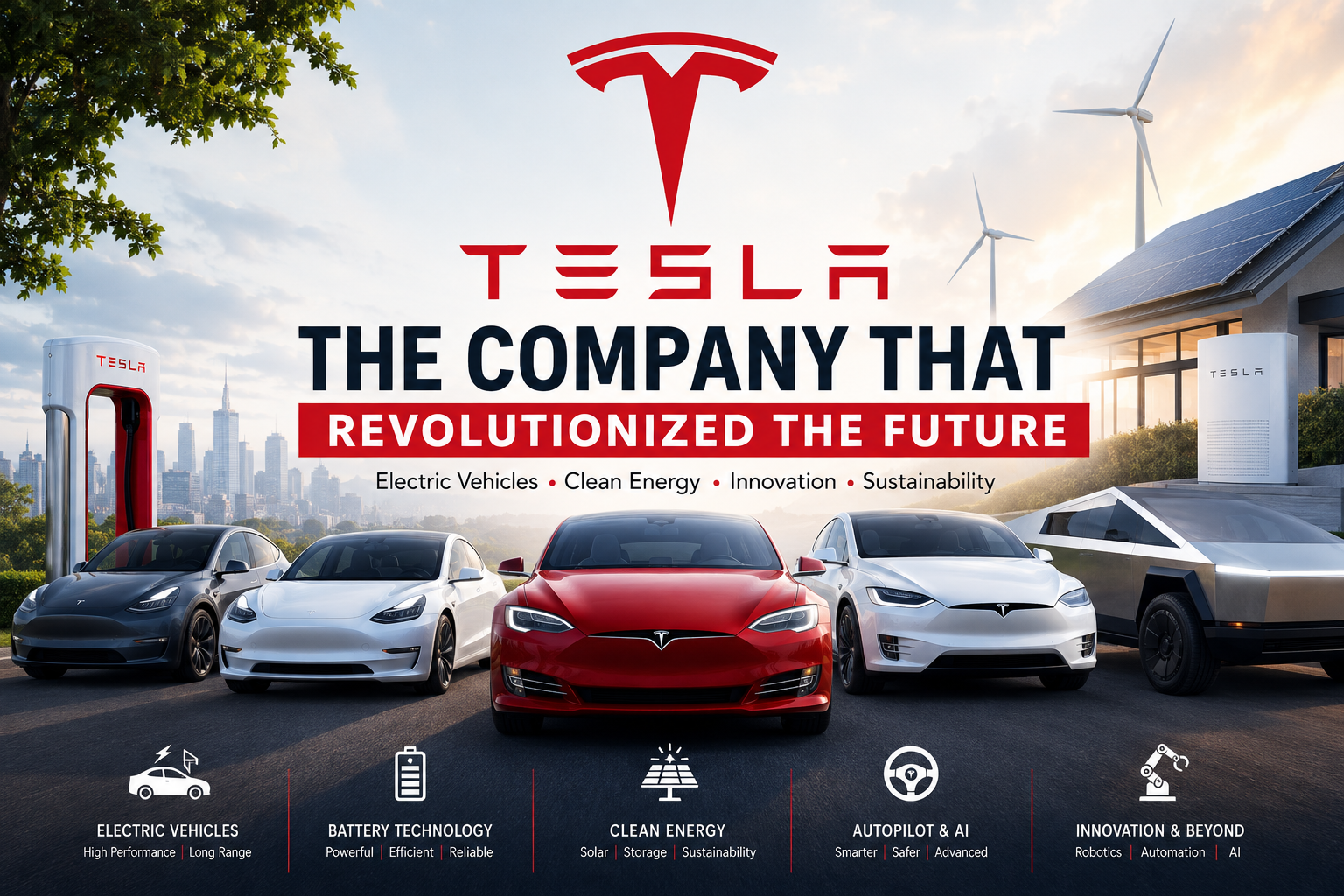
Tesla is one of the world’s most innovative technology and automotive companies. It has transformed the global perception of electric vehicles (EVs), proving that sustainable transportation can be powerful, luxurious, and practical. From producing high-performance electric cars to developing renewable energy solutions, Tesla has become a symbol of innovation and the future of clean energy.
Founded in 2003, Tesla has grown from a small startup into one of the world’s most valuable companies. Its products include electric vehicles, solar panels, battery storage systems, and artificial intelligence technologies. Under the leadership of Elon Musk, Tesla has consistently pushed the boundaries of engineering and technology.
This article explores Tesla’s history, mission, products, technologies, business model, achievements, challenges, and future prospects.
The History of Tesla
Tesla was founded in July 2003 by engineers Martin Eberhard and Marc Tarpenning. Their vision was to create electric vehicles that were superior to gasoline-powered cars in every aspect.
In 2004, entrepreneur Elon Musk invested in Tesla during its first major funding round and became Chairman of the Board. His investment and strategic leadership played a significant role in shaping Tesla’s future.
Tesla’s first production vehicle, the Tesla Roadster, was introduced in 2008. Unlike previous electric vehicles, the Roadster offered impressive acceleration, long driving range, and premium performance. It proved that electric vehicles could compete with sports cars.
Following the Roadster, Tesla expanded its product lineup with luxury sedans, SUVs, and affordable electric vehicles, making EV technology accessible to millions of consumers worldwide.
Tesla’s Mission
Tesla’s official mission is:
“To accelerate the world’s transition to sustainable energy.”
Unlike traditional automobile manufacturers, Tesla focuses not only on electric vehicles but also on renewable energy generation and energy storage.
Its mission involves:
- Reducing global carbon emissions
- Replacing fossil fuels with clean energy
- Developing efficient battery technology
- Making renewable energy affordable
- Promoting sustainable transportation worldwide
Tesla’s Leadership
Although Tesla was founded by Martin Eberhard and Marc Tarpenning, Elon Musk has become the face of the company.
As CEO, Musk has led Tesla through:
- Rapid innovation
- Global expansion
- Gigafactory construction
- Battery technology improvements
- Artificial Intelligence development
- Autonomous driving research
His leadership style emphasizes ambitious goals, rapid execution, and continuous innovation.
Tesla’s Electric Vehicles
Tesla currently manufactures several electric vehicles that serve different customer segments.
Tesla Model S
The Model S is Tesla’s premium luxury sedan.
Key features include:
- Long driving range
- High-performance acceleration
- Spacious interior
- Advanced Autopilot features
- Large touchscreen interface
- Premium safety ratings
The high-performance Plaid version is among the fastest production cars in the world.
Tesla Model 3
The Model 3 was designed to bring electric vehicles to the mass market.
Benefits include:
- Affordable pricing compared to luxury EVs
- Excellent driving range
- Low maintenance costs
- Advanced software
- Fast charging capability
Model 3 has become one of the best-selling electric vehicles globally.
Tesla Model X
Model X is Tesla’s premium electric SUV.
Highlights include:
- Falcon Wing rear doors
- Large seating capacity
- Exceptional safety
- High performance
- Long range
It combines luxury with family-friendly practicality.
Tesla Model Y
Model Y is Tesla’s compact crossover SUV.
It offers:
- Spacious cargo space
- Comfortable seating
- Excellent efficiency
- Long driving range
- Advanced safety systems
Today, Model Y is among Tesla’s highest-selling vehicles worldwide.
Tesla Cybertruck
Cybertruck introduced a completely different design philosophy.
Key characteristics include:
- Stainless steel exterior
- High durability
- Powerful towing capability
- Electric drivetrain
- Advanced off-road performance
Its futuristic appearance generated enormous global attention.
Tesla Semi
Tesla Semi targets commercial transportation.
Advantages include:
- Reduced operating costs
- Zero tailpipe emissions
- High torque
- Long-distance capability
- Lower maintenance expenses
It aims to transform the freight industry.
Tesla Roadster (Next Generation)
Tesla has announced a next-generation Roadster featuring:
- Extraordinary acceleration
- Extremely high top speed
- Long battery range
- Advanced engineering
It represents Tesla’s vision for high-performance electric sports cars.
Tesla’s Battery Technology
One of Tesla’s greatest strengths is battery innovation.
Tesla develops:
- Lithium-ion battery packs
- High-energy-density cells
- Battery management systems
- Thermal management technologies
Battery improvements have increased:
- Vehicle range
- Charging speed
- Battery lifespan
- Energy efficiency
Tesla continues investing heavily in next-generation battery research.
Tesla Supercharger Network
Charging infrastructure is one of Tesla’s major competitive advantages.
The Supercharger network provides:
- Fast charging
- Convenient locations
- Long-distance travel support
- Reliable charging experience
Tesla has installed thousands of Supercharger stations across many countries, helping reduce “range anxiety” among EV owners.
Tesla Gigafactories
Tesla manufactures products through massive Gigafactories.
These facilities produce:
- Batteries
- Electric motors
- Vehicle components
- Energy storage systems
- Finished vehicles
Gigafactories improve production efficiency while lowering manufacturing costs.
Major Gigafactories operate in:
- United States
- China
- Germany
Additional facilities continue to expand Tesla’s global production capacity.
Tesla Energy
Tesla is more than an automobile company.
Its energy division includes:
Solar Panels
Tesla develops solar panels for homes and businesses that generate clean electricity from sunlight.
Solar Roof
Tesla’s Solar Roof replaces traditional roofing materials while generating electricity.
Benefits include:
- Clean energy production
- Modern appearance
- Reduced electricity bills
Powerwall
Powerwall is a home battery storage system.
It stores electricity generated by solar panels and provides backup power during outages.
Megapack
Megapack is designed for utility-scale energy storage.
It helps stabilize electrical grids by storing renewable energy.
Tesla Autopilot
Tesla’s Autopilot is an advanced driver assistance system.
Features include:
- Adaptive cruise control
- Lane keeping
- Traffic-aware driving
- Automatic lane changes
- Smart navigation assistance
Autopilot requires active driver supervision and is designed to assist rather than fully replace the driver.
Full Self-Driving (FSD)
Tesla is continuously developing Full Self-Driving software.
The goal is to enable vehicles to perform increasingly complex driving tasks using:
- Cameras
- Artificial Intelligence
- Neural Networks
- Computer Vision
While significant progress has been made, the system still requires driver attention in many regions and operates under varying regulatory approvals.
Tesla Artificial Intelligence
Artificial Intelligence plays a central role in Tesla’s ecosystem.
Tesla uses AI for:
- Self-driving technology
- Manufacturing automation
- Robot vision
- Energy optimization
- Quality control
The company also develops custom AI hardware for vehicle computing.
Tesla Optimus Robot
Tesla is developing a humanoid robot called Optimus.
Potential applications include:
- Manufacturing
- Warehouse operations
- Household assistance
- Repetitive industrial tasks
Although still under development, Optimus represents Tesla’s long-term ambitions beyond automotive manufacturing.
Tesla Software Updates
Unlike traditional vehicles, Tesla cars receive over-the-air software updates.
These updates can introduce:
- New features
- Improved safety
- Better efficiency
- Bug fixes
- Performance enhancements
Owners often receive improvements without visiting a service center
Tesla’s Business Model
Tesla follows a unique business model.
Major revenue sources include:
- Vehicle sales
- Energy products
- Software services
- Charging infrastructure
- Regulatory credits
Tesla also sells directly to customers instead of relying heavily on traditional dealership networks in many markets.
Environmental Impact
Tesla contributes to environmental sustainability by:
- Reducing fossil fuel dependence
- Promoting renewable energy
- Supporting battery recycling initiatives
- Lowering transportation emissions
- Encouraging clean electricity usage
Although battery manufacturing has environmental impacts, Tesla invests in improving efficiency and recycling processes.
Tesla’s Global Expansion
Tesla has expanded rapidly into international markets.
Its presence includes:
- North America
- Europe
- China
- Australia
- Middle East
- Several Asian countries
Global manufacturing and localized production have helped improve supply chains and customer delivery times.
Challenges Faced by Tesla
Despite its success, Tesla faces several challenges.
These include:
Increasing Competition
Many established automakers now offer competitive electric vehicles.
Supply Chain Issues
Global shortages of raw materials and semiconductors can affect production.
Regulatory Requirements
Autonomous driving technologies must comply with varying regulations worldwide.
Battery Material Availability
Demand for lithium, nickel, and other battery materials continues to grow
Tesla’s Achievements
Tesla has achieved numerous milestones.
Some of its major accomplishments include:
- Popularizing electric vehicles
- Becoming one of the world’s most valuable automakers
- Building a global charging network
- Advancing battery technology
- Leading innovation in autonomous driving research
- Expanding renewable energy solutions
These achievements have significantly influenced the automotive industry.
Future of Tesla
Tesla continues investing in:
- Advanced AI
- Improved batteries
- Affordable electric vehicles
- Robotics
- Renewable energy
- Manufacturing automation
As governments worldwide encourage cleaner transportation and energy systems, Tesla is likely to remain an influential player in the transition toward sustainable technology.
Conclusion
Tesla has fundamentally changed the automotive industry by demonstrating that electric vehicles can deliver outstanding performance, cutting-edge technology, and everyday practicality. Beyond cars, the company has expanded into renewable energy, battery storage, artificial intelligence, and robotics, positioning itself as a broader technology and clean-energy company.
While Tesla faces increasing competition and regulatory challenges, its relentless focus on innovation continues to shape the future of transportation and sustainable energy. Whether through electric vehicles, energy storage systems, or AI-driven technologies, Tesla remains one of the most influential companies of the 21st century, inspiring industries worldwide to embrace cleaner, smarter, and more efficient solutions.
2. Important LPUNEST 2026 Phase 1 Schedule
Frequently Asked Questions (FAQs)

educationsunrise624@gmail.com
Verified DeskSenior Academic Admissions Counselor & Entrance Exam Analyst specializing in LPUNEST, JEE Main, NEET UG, and University Cutoffs.
